An aircraft’s financial journey unfolds across several complex stages, each requiring tactical decision-making to preserve value and extract maximum return over time. From initial purchase to final disassembly, every phase presents distinct financial levers and potential pitfalls. For fleet managers and owners alike, understanding these steps is key to strategic planning and sustainable returns.
Acquisition: The Initial Investment
It all begins with securing the aircraft—typically the most capital-intensive moment in the entire timeline. Whether opting for a brand-new airframe or a seasoned model, the initial price point demands thoughtful financial structuring. Buyers often rely on financing options or leasing packages to mitigate the upfront burden, though these arrangements introduce their own limitations, such as interest liabilities or reduced operational freedom.
Comprehensive vetting is also vital. Technical inspections, legal documentation, and compliance with aviation regulations are all essential steps before an aircraft is cleared to join a fleet.
A key consideration during this phase is the choice between leasing and ownership. While owning a jet outright offers autonomy and potential long-term value, leasing provides adaptability—ideal for operators navigating rapid shifts in demand or technology.
In-Service Use: Turning Aircraft into Revenue Engines
Once integrated into active service, the aircraft transitions from capital outlay to income generator. Passenger carriers, logistics companies, and charter operators use these assets to generate cash flow—but doing so requires diligent cost control. Fuel, routine maintenance, crew wages, and usage fees all eat into profits.
To stay ahead, operators turn to data-driven strategies: fine-tuning flight schedules, maximizing utilization, and eliminating inefficiencies. Predictive analytics now play a growing role in diagnosing mechanical issues before they escalate, which significantly reduces unplanned downtime.
At this stage, aviation MRO services (Maintenance, Repair, and Overhaul) become indispensable. These services not only ensure airworthiness but also help extend the useful life of the aircraft. By synchronizing maintenance with usage patterns and closely monitoring cost inputs, operators can keep aircraft in top condition while safeguarding their financial performance.
Idle Periods: Mitigating Value Loss
Aircraft inevitably face periods of inactivity. Market contractions, seasonal lulls, or scheduled overhauls can lead to temporary groundings. During such times, protective storage isn’t just helpful—it’s essential. Parking a plane without proper care risks corrosion, system failure, and other forms of preventable damage.
To avoid asset degradation, operators must follow structured preservation protocols, including periodic system checks and climate-controlled environments. Doing so preserves resale and leasing value and makes re-entry into service smoother when demand returns.
Final Stage: Unlocking Residual Value
Eventually, every aircraft approaches the end of its economic usefulness. Even then, opportunities remain to capture residual value. Some airframes are sold to lower-demand markets; others are dismantled so that components—like engines or navigation systems—can be resold to cost-conscious buyers.
In some cases, structurally sound aircraft are refurbished for secondary use. When that’s not viable, recycling metals such as aluminum or titanium provides both environmental and financial benefits, contributing to resource recovery and sustainability.
Across its entire lifecycle, an aircraft is more than just a tool for transportation—it’s a financial asset that demands careful oversight. When managed thoughtfully at each stage, it can deliver strong returns, operational longevity, and strategic advantage.
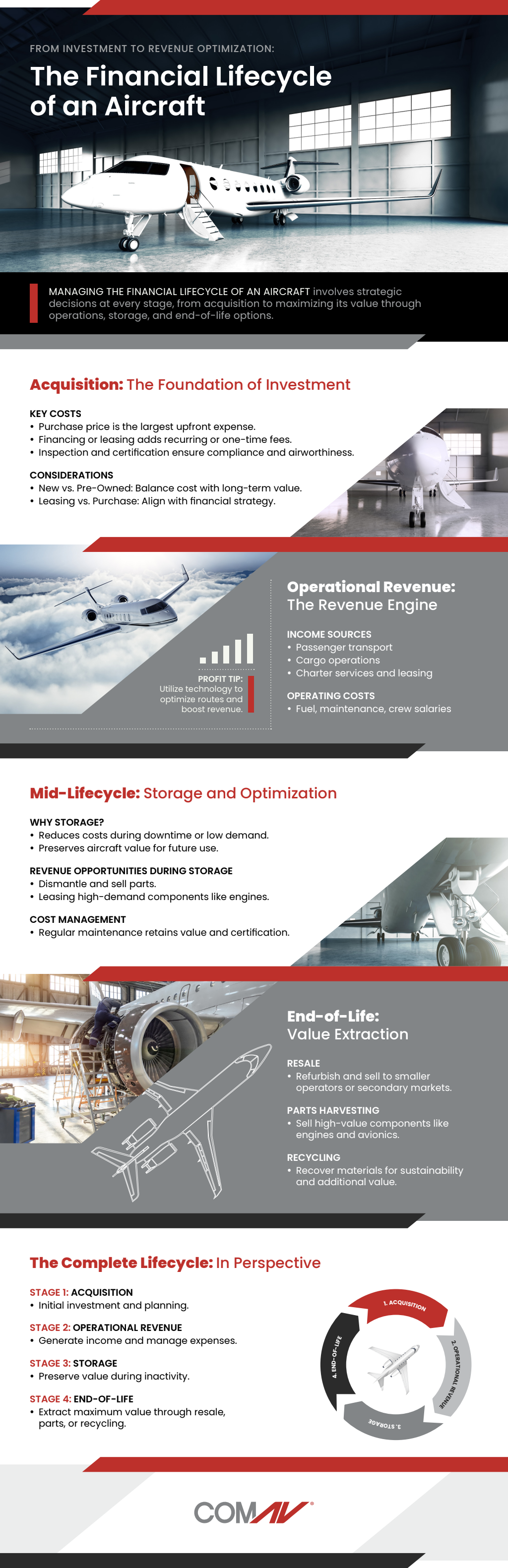
For a clear visual representation of this lifecycle and its financial considerations, refer to the accompanying infographic.